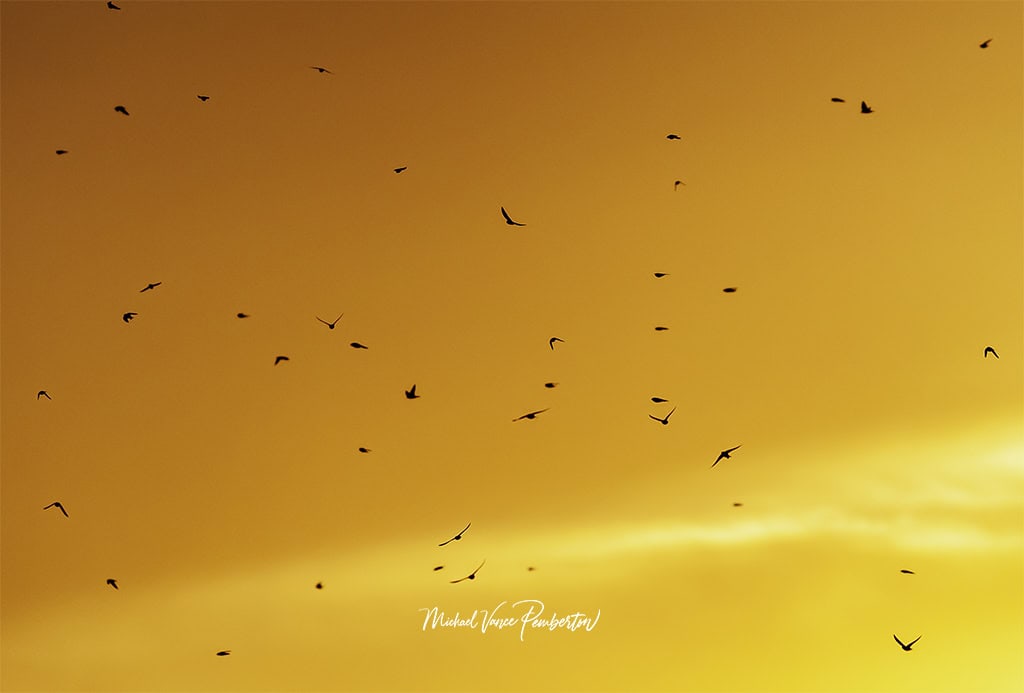

The Colorado River near Castle Dome glowed with first light, the water turning from ink to molten copper as the desert woke. Out of the riparian thickets rose a living wave of thousands of Tree Swallows, their backs flashing iridescent blue and white as they climbed, dove, and wheeled in synchronized chaos. They skimmed the surface for insects, climbed in spirals, then poured across the sky like smoke caught in wind. For more than twenty years, I had returned to this stretch of the Sonoran Desert, tripod planted or lens balanced on a rock, waiting for the moment when preparation, light, and the birds themselves would finally meet.
On that morning, they did.
It took me over twenty years to capture the swallow migration. Don’t ever give up on your goals. Some take longer than others.
This is the story of those years, the failures, the small victories, the technical evolution, and the quiet transformation that happens when you keep showing up for something that refuses to be rushed.
The Late Bloom.
I came to serious photography in my thirties, not through art school or a deliberate plan, but through necessity and grace. For nearly a decade, I traveled the country as a caregiver for my aunt Kathey while she battled dementia. Those miles became my real education. Between medical appointments and quiet hotel rooms, I began noticing how light fell across a windshield, how a flock of birds could turn an ordinary sky into something sacred, how emotion lived in the smallest gestures of landscape and light. The camera started as a way to hold memory when everything else felt uncertain. It became something else entirely: a practice of presence.
When I settled back into Arizona and the Sonoran Desert that had always called me home, that presence found its first great, stubborn test in the swallows. Each spring and fall, Tree Swallows and Cliff Swallows move through the Lower Colorado River Valley. They funnel along the river corridor near Yuma and Castle Dome, using the cottonwood-willow galleries and marshes as critical stopover habitat on the Pacific Flyway. Flocks can number in the thousands. They arrive in waves, feed voraciously on emerging insects, then lift as one organism, turning, banking, and reforming in patterns that feel more like weather than individual animals.
I had seen photographs of these spectacles. I had heard the stories from local birders and naturalists. But turning that fleeting, collective energy into images that carried emotion and place required something the desert teaches best: patience measured in seasons, not hours.
The Desert Classroom.
The Sonoran Desert does not reward the impatient. Heat builds fast. Light turns brutal by mid-morning, carving deep shadows and blowing highlights on iridescent feathers. The birds themselves are masters of unpredictability, changing direction mid-wingbeat as they pursue invisible prey or respond to some collective cue known only to the flock. My early attempts were humbling. I would arrive at dawn, set up, and shoot. The cards came home full of blurry wings, tiny specks against the vast sky, or empty frames where the birds had been two seconds earlier.
I learned to scout with intention. Not just locations, but rhythms. Which bends in the river caught the softest morning light? Where did the flocks reliably drink or bathe before the heat rose? I began studying the health of the riparian corridor itself, how water flows, vegetation changes, and insect hatches influenced whether the swallows would linger or pass through quickly. Conservation entered the work naturally. These narrow green ribbons are lifelines. In Arizona, only about two percent of the landscape is riparian or wetland, yet up to eighty percent of wildlife depends on it at some point in the year. Drought, upstream water allocation, and habitat fragmentation directly affect whether migratory birds find rest and fuel here. Photographing the swallows became, in part, a way of bearing witness to places worth protecting.
Equipment and technique evolved alongside understanding. Early digital SLRs gave way to mirrorless bodies with vastly improved subject tracking. I learned to trust continuous autofocus modes, back-button focus, and high frame rates not as a crutch, but as tools that let me stay present for composition and moment. Shutter speeds often lived at 1/4000s or faster to freeze the blur of wings, yet sometimes I deliberately slowed the shutter to let motion paint across the sensor, conveying speed and life rather than freezing everything into clinical sharpness. Composition shifted too: sometimes isolating a single bird against the river’s reflection, sometimes embracing the abstract chaos of the entire flock as a single moving texture.
Failures kept teaching. One spring, unseasonal winds and cold scattered the flocks before they could build. Another year, distant wildfire smoke turned the light flat and gray for weeks. There were mornings I stood for hours with nothing usable, sweat stinging my eyes, questioning whether the project had become an exercise in stubbornness rather than art. But each empty frame revealed something new about the angle of light on feathers, about how the birds used the river as a visual anchor, about my own capacity to stay open when results refused to come.
Parallels in the Work.
The long swallow pursuit echoed through everything else I photograph. Lowrider culture in Arizona taught me the same rhythm: “low and slow.” You do not rush the shot. You observe, build quiet respect, and wait for the moment when machine, light, and human story align. In national parks Grand Teton, Yellowstone, Bryce Canyon, bison or elk or sweeping landscapes demanded an identical presence. And in my abstract work, where I chase light, texture, and emotional resonance in the desert, the principle remained constant: the image often reveals itself only after repeated, patient returns.
The swallows became a masterclass that informed all of it. Their migration is a living lesson in resilience. These small birds travel thousands of miles twice a year, depending on fragile stopover habitats like the one along the Colorado. When I finally began making images that felt alive, they carried more than technical success. They carried years of relationship with a place and its creatures.
The Morning Everything Changed.
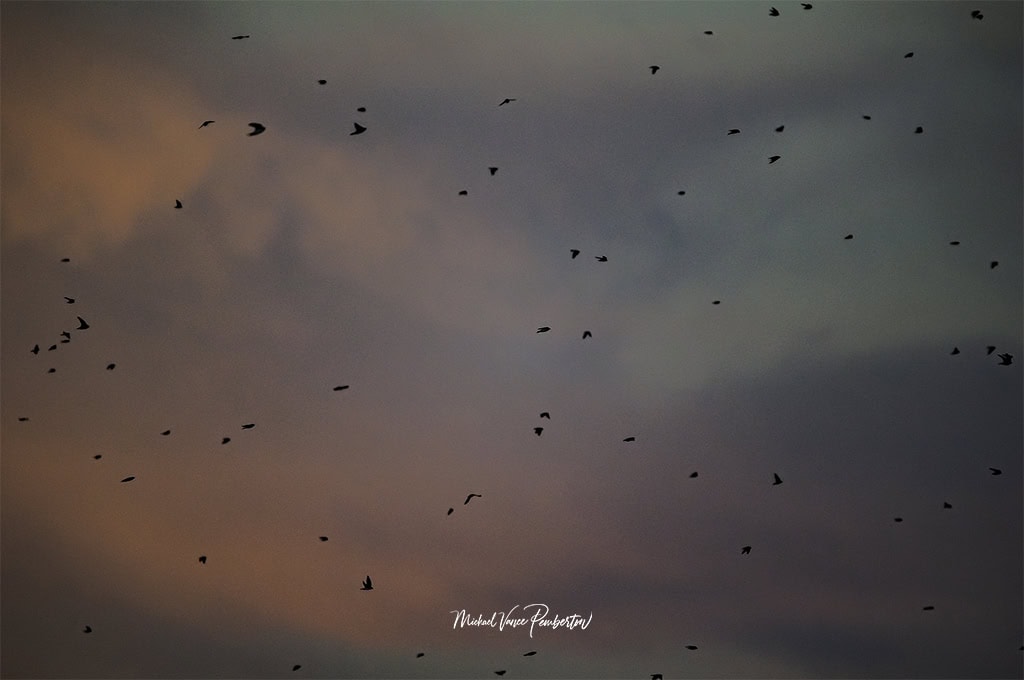
It was a spring morning that began like many others. I arrived in darkness, parked on a slight rise with a clear sightline to a feeding stretch I had watched for seasons. Tripod legs planted firmly, long lens ready, extra batteries and cards in easy reach. The sky lightened from deep indigo to soft lavender. Single birds appeared first, then pairs, then a growing, chattering wave. They skimmed the water, dipped and rose, climbed in loose spirals, then condensed into tighter, faster-moving groups.
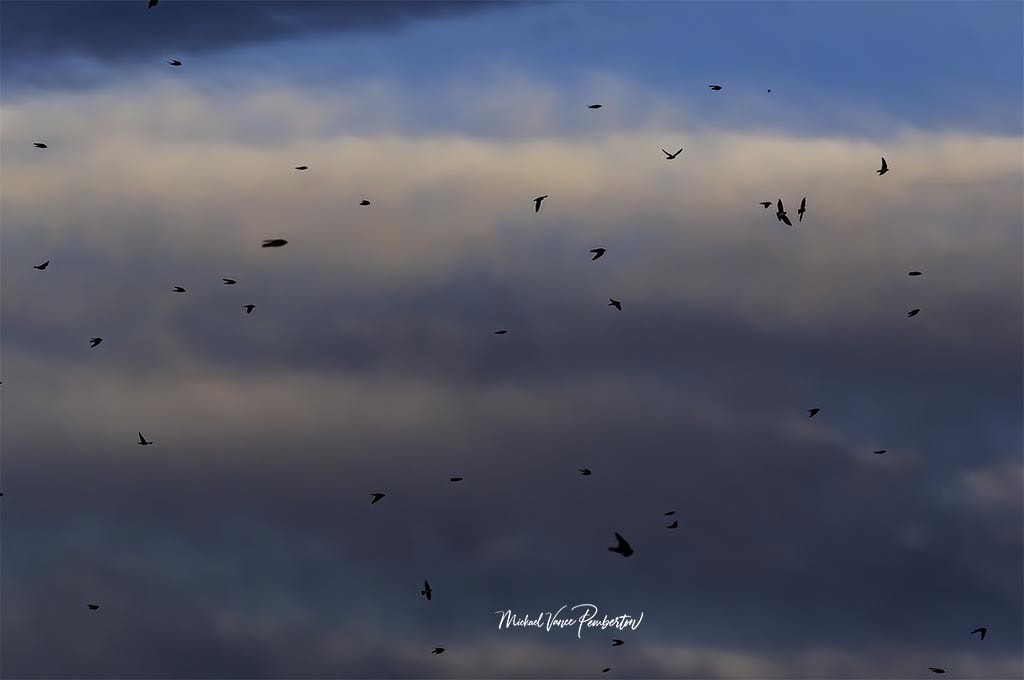
I tracked one bird, then let the flock fill the frame, adjusting exposure as the light strengthened. The side light was perfect for modeling form without harsh contrast. A dense pass brought them closer than usual. Wings extended, bodies catching the gold, the river doubling the motion below. I shot in controlled bursts, staying loose in my stance so I could follow the flow rather than fight it. For several minutes, the birds worked the area in overlapping waves. Then, as if on a shared signal, the main flock lifted and moved on.
What the Wait Taught Me.
Patience in wildlife photography is not passive waiting. It is active, disciplined observation. It is learning the language of light and behavior until you can anticipate rather than merely react. It is technical mastery earned through repetition and honest critique of your own work. Most of all, it is emotional resilience, the willingness to return season after season without guarantee of reward.
For anyone carrying a long-term creative project, whether wildlife, landscape, cultural documentation, or abstract work, the lessons translate directly. Start where you are. Use the gear you have. Keep showing up with openness and respect. Technical skill compounds over time, but vision deepens through a lived relationship with your subject. My own path from caregiver on the road to fine-art photographer rooted in the Sonoran Desert showed me that some of the strongest work emerges at the intersection of personal story and persistent craft.
The swallow project continues. There are always new angles, different light, fresh stories within the flock. New generations of birds return each year; new threats and new protections shape the habitat. The work remains a dialogue rather than a finished statement.
If these images and this story resonate, I invite you to explore more of my work: wildlife and landscapes from the national parks, lowrider culture as living Chicano art, and abstract explorations of light and emotion in the desert. Limited-edition prints and ongoing projects live at michaelvancepemberton.com. Whether you are a fellow photographer, a conservation advocate, or simply someone who believes in the power of showing up for what matters, I hope this reminds you that the frame you have been chasing may be closer than it feels.
The desert keeps its own time. The swallows keep returning. And the camera, when treated with patience and respect, keeps teaching us how to see.

Recent Posts
Hey there, fellow shadow chaser. If you’re reading this, you’ve probably stood in golden hour light, watched a bird, a car, or a lone tree melt into a perfect black shape against a blazing sky,...
An Artist’s Journey. Love, Money, Survival, and That Stubborn Refusal to Suck at It.
An artist’s journey is a lot like everyone else’s: you’re out here hunting for love, scrambling for money, and just trying to survive life without face-planting into the void like the rest of...